

Plum blossoms in Japan: meaning, when to see them, and best places
Before cherry blossoms steal the spotlight, plum blossoms (ume) quietly announce the end of winter in Japan. Blooming from late January to March, plum blossoms are deeply rooted in Japanese culture. They are less crowded, more subtle, and often more meaningful than sakura.
What are plum blossoms (ume)?
What are plum blossoms (ume)?
Plum blossoms come from the ume tree, which blooms while winter is still present.
Unlike cherry blossoms:
Plum blossoms bloom earlier
They last longer
They have a strong, sweet fragrance
They symbolize endurance rather than fleeting beauty
Ume flowers range from white to deep pink, sometimes even red.
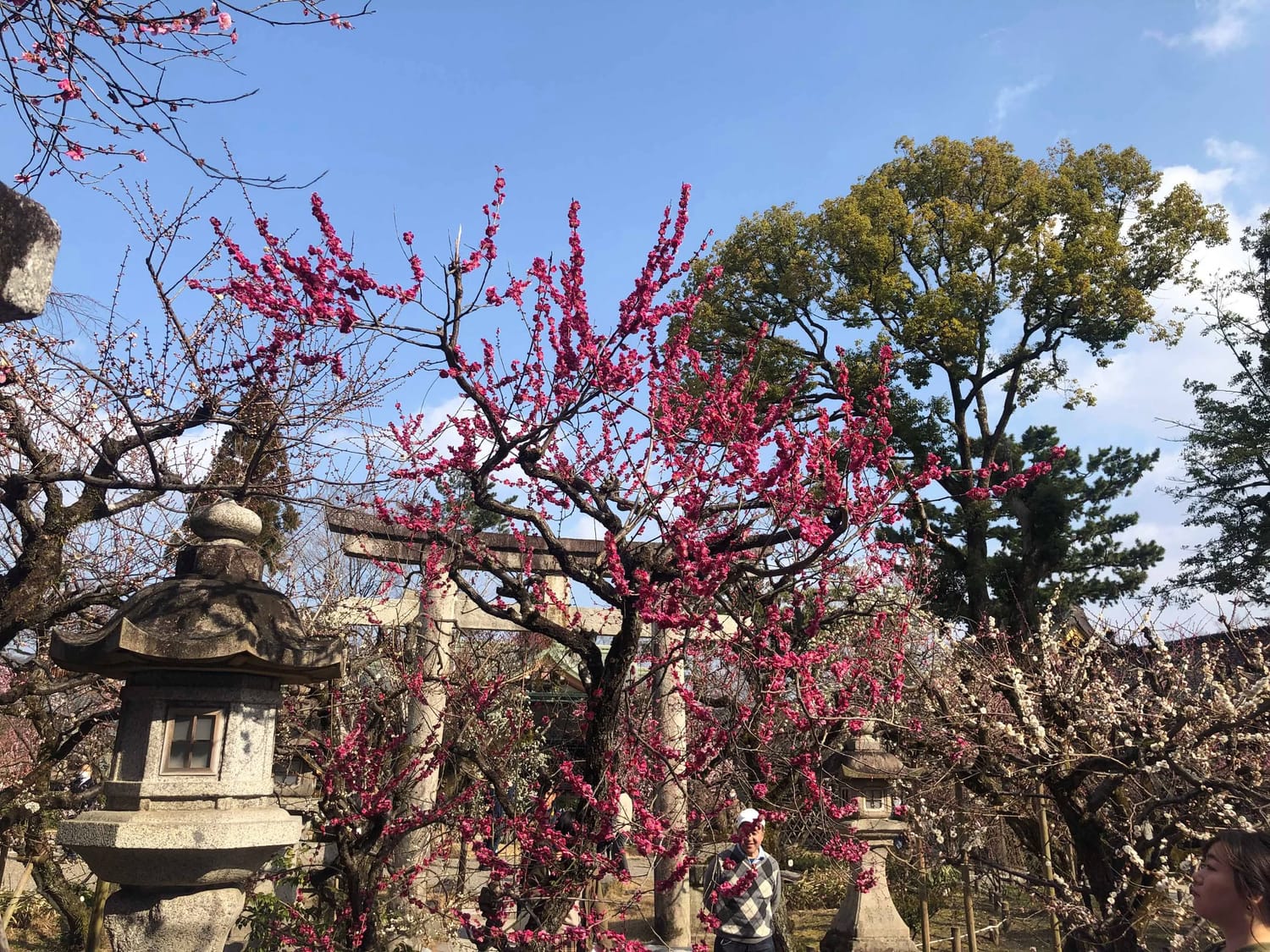
Why plum blossoms are important in Japan
Symbol of resilience and renewal
Plum trees bloom in the cold, sometimes with snow still on the ground.
Because of this, ume symbolizes:
Perseverance
Hope
Strength during hardship
They represent the first sign of spring, not its celebration.
Linked to learning and success
Plum blossoms are strongly associated with education and exams.
Many plum blossom shrines are Tenmangu shrines, dedicated to Sugawara no Michizane, the deity of learning.
Students visit during exam season to pray for success.
Older than cherry blossom culture
Historically, plum blossoms were admired before cherry blossoms.
During the Heian period, aristocrats wrote poetry about ume long before sakura became popular.
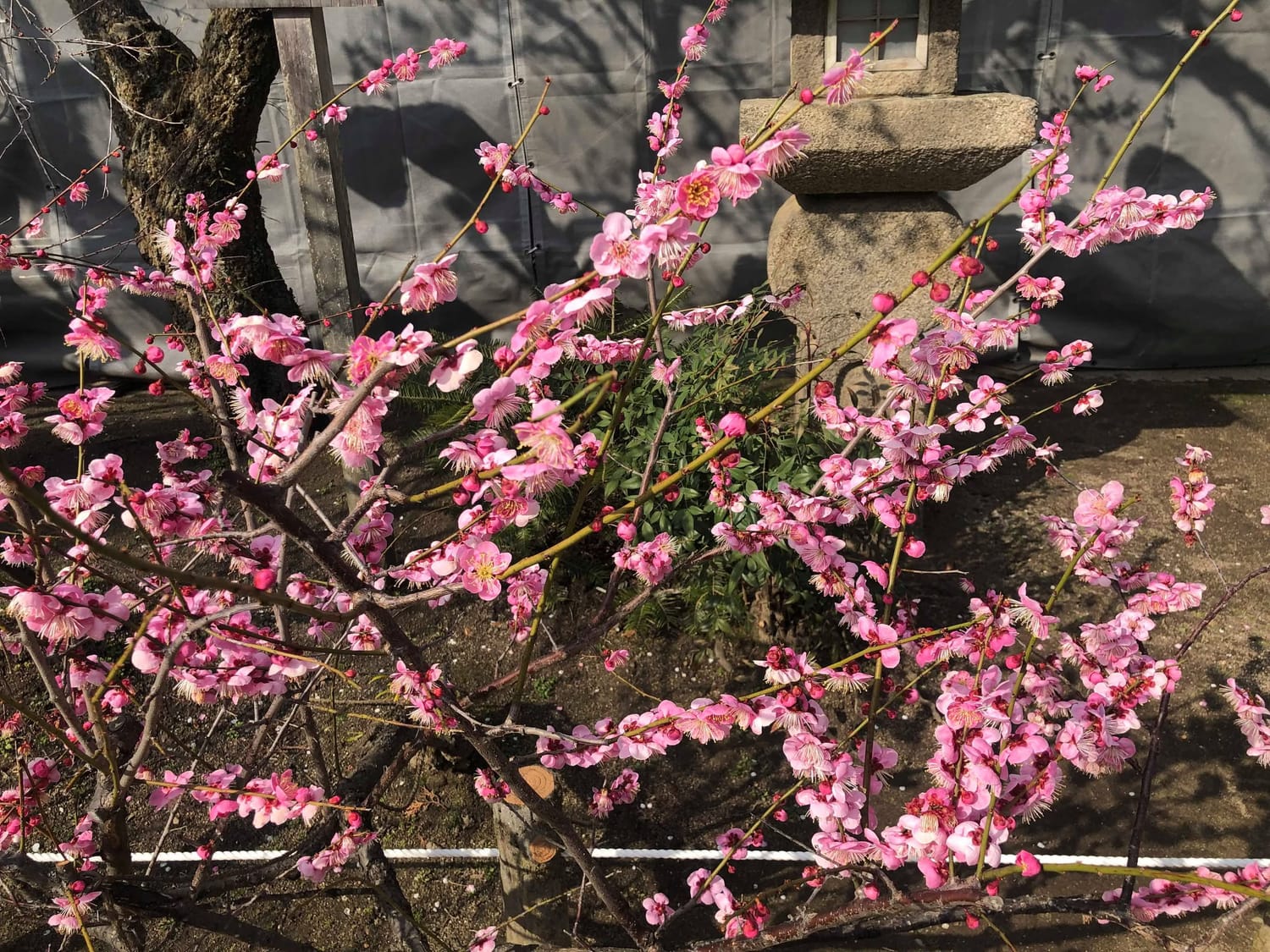
When is plum blossom season in Japan?
Plum blossom season depends on region and weather, but generally:
Kyushu & southern Japan: late January to February
Tokyo, Kyoto, Osaka: February to early March
Northern regions: late February to March
Plum blossoms last longer than cherry blossoms, often 2–4 weeks.
Where to see plum blossoms in Japan
Tokyo
Tokyo
Yushima Tenjin – Famous plum shrine, peak in February
Koishikawa Korakuen – Early and late blooming varieties
Hanegi Park – Large public plum grove
Ushijima Plum Garden – Small and local, near Asakusa
Kyoto
Kitano Tenmangu Shrine – Kyoto’s main plum blossom site
Jonangu Shrine – Late-blooming varieties
Gion Shirakawa area – Occasional early blooms
Osaka
Osaka Castle Park Plum Grove – One of Kansai’s largest
Expo ’70 Commemorative Park – Wide space, staggered blooms
Beyond the big cities
Mito Kairakuen (Ibaraki) – Over 3,000 plum trees
Atami Plum Garden (Shizuoka) – Very early blooming
Dazaifu Tenmangu (Kyushu) – One of Japan’s most important plum sites
How to enjoy plum blossom season
Go early and slow
Plum blossom spots are calm, especially compared to cherry blossom season.
Early mornings are ideal for:
Quiet walks
Photography
Enjoying the fragrance
Understand the difference with cherry blossoms
Plum blossoms are about:
Observation, not parties
Quiet appreciation, not picnics
Winter turning into spring
There is no loud hanami culture for ume. That’s part of the beauty.Kyoto
Kitano Tenmangu Shrine – Kyoto’s main plum blossom site
Jonangu Shrine – Late-blooming varieties
Gion Shirakawa area – Occasional early blooms
Combine with seasonal food and temples
Plum blossom viewing pairs well with:
Shrine visits
Tea and wagashi
Winter gardens and historical parks
Why you should see plum blossoms in Japan
If you want:
Fewer crowds
A deeper cultural experience
A seasonal moment locals truly appreciate
Plum blossom season is one of Japan’s most underrated travel experiences.
It’s quiet, symbolic, and deeply connected to the rhythm of the country.
Plan Your Japan Trip More Easily
If you're going to Japan you're probably facing :
Too much information
How to organize
Don’t know where to go
Train system feels confusing
Afraid of missing places
Planning a trip to Japan usually breaks at the same point: you save a lot of places, but don’t know how to turn them into a realistic route. Cities are large, distances are not intuitive, and it’s hard to know what actually fits in one day.
This guide was created to solve that. It helps you understand how places connect, how many days make sense per area, and how to build an itinerary that flows.
With the interactive map, you can explore curated spots across Japan, follow ready-made itineraries and day trips, mix my routes with your own, and adapt everything to your pac
I created my Japan Travel Guide to help you organize your trip in a clear, realistic way.
Details on what you'll have
Best of both world : touristy & off the beaten path places
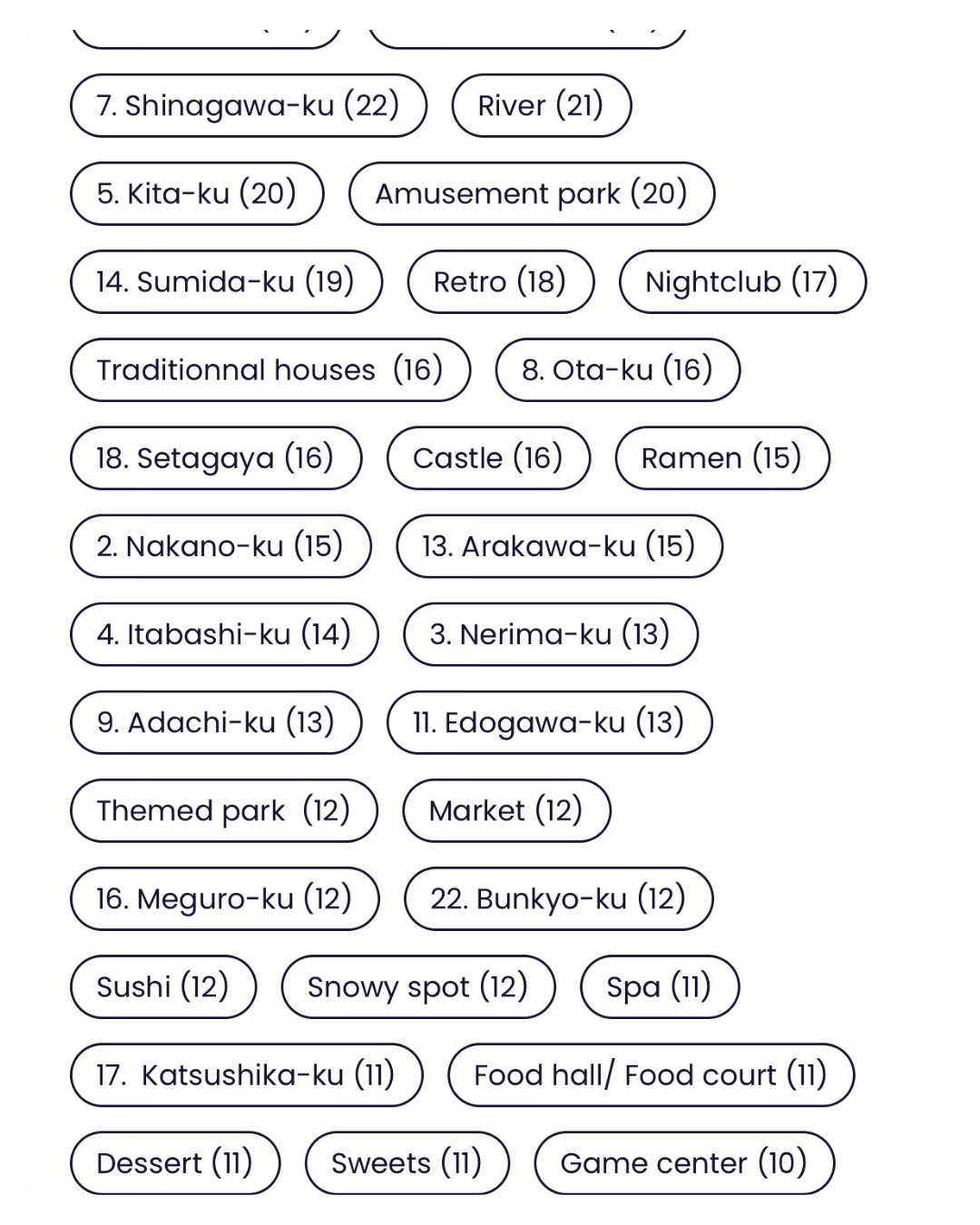
+ 1000 things to do, filterable by category & tags
Lifetime access to my itinerary and all future updates.
10 to 30 days curated itineraries, fully customizable
Kanto (Tokyo & surroundings) Day by Day customizable Itinerary (10 to 15 days)
Kansai (Osaka, Kyoto, Nara...) Day by day Itinerary customizable (13 to 15 days)
Tokyo Guide by Neighborhood (23 special ward)
15+ additional day trips detailed for exploring nearby destinations from Tokyo, Osaka, Kyoto.
Interactive map with all key spots marked & filterable by category & tags
Benefit from in-depth practical advice (navigation, accomodation, restaurants, cultural experiences)
PDF & Excel sheets (with less updates than online version)

What it looks like on the app :




If you prefer something fully tailored, I also offer a 100% custom travel planning service.
I design a day-by-day itinerary based on your dates, interests, budget, travel pace, and priorities. You simply follow the plan and enjoy your trip.
And if you like flexible, editable itineraries, you can also find my ready-made itineraries on Holicay.
They’re ideal if you want a solid base you can customize with your travel companions.

Hi, I’m Marie, the creator behind @tabimawari.
I lived in Kyoto, learned Japanese, and keep returning to explore Japan beyond the obvious.
Planning a trip to Japan usually breaks at the same point: you save a lot of places, but don’t know how to turn them into a realistic route. Cities are large, distances are not intuitive, and it’s hard to know what actually fits in one day.
This guide was created to solve that. It helps you understand how places connect, how many days make sense per area, and how to build an itinerary that flows.
With the interactive map, you can explore curated spots across Japan, follow ready-made itineraries and day trips, mix my routes with your own, and adapt everything to your pace.

MY SOCIALS


MY NEWSLETTER
Japan Monthly by Tabimawari : Subscribe to get a monthly email packed with inspiration, local tips, and events happening across Japan straight from someone who’s lived and traveled a lot.

Look for the best accommodations in Japan :

Explore Japan with Local Guides
Marie creator behind @Tabimawari
Hi, I’m Marie.
French islander from Reunion island, Japan lover, and travel planner behind Tabimawari.
I spent a year living in Kyoto, learning Japanese and falling in love with the culture. Since then, I’ve kept going back, exploring every corner from Tokyo to the tiniest hidden towns.
I created these guides after spending months planning, testing, and fine-tuning every detail so you don’t have to. Inside, you’ll find:
✅ Interactive maps
✅ Step-by-step directions
✅ Local spots + travel tips
✅ Offline use
Each guide is made with care, based on real-life travel, not generic blog advice.
This is what I wish I had on my first trip to Japan and now it’s yours.
MY SOCIALS
MY NEWSLETTER
Plan your Japan trip without
the overwhelm
Follow me
Newsletter
Japan Monthly : Subscribe to get a monthly email packed with inspiration, local tips, and events happening across Japan straight from someone who’s lived and traveled a lot.