

First Time in Kyoto: 12 Must-See Places You Can’t Miss
Planning your first trip to Kyoto and wondering which places you absolutely shouldn't miss?
Kyoto is one of Japan's most fascinating cities, known for its historic temples, traditional neighborhoods, beautiful gardens and centuries-old cultural traditions.
Once Japan's capital for more than a thousand years, Kyoto remains one of the country's most important cultural destinations.
While Tokyo is famous for its skyscrapers and busy neighborhoods, Kyoto offers a completely different experience. Here, you'll discover wooden streets, Buddhist temples, Shinto shrines, peaceful gardens and forested mountains.
But Kyoto is also one of Japan's most popular tourist destinations, and some attractions can become extremely crowded.
After visiting Kyoto several times, I've put together 11 must-see places in Kyoto for first-time visitors, combining famous landmarks with cultural experiences and nature escapes.
You don't need to visit everything in one day, or even during the same trip!
Some attractions are located close together, while others require a separate half-day or full day.
Here's what I recommend adding to your Kyoto itinerary.
If there's one shrine almost everyone associates with Kyoto, it's Fushimi Inari Taisha.
Located in southern Kyoto, this important Shinto shrine is dedicated to Inari, a deity associated with rice, agriculture and prosperity.
It's particularly famous for its thousands of vermilion torii gates, which form tunnels along walking paths leading up Mount Inari.
The most photographed section is Senbon Torii, where the gates stand closely together, creating one of Kyoto's most recognizable scenes.
However, Fushimi Inari is much larger than many visitors realize.
Beyond the main shrine buildings, several walking trails continue into the forested mountain, passing smaller shrines, stone fox statues and viewpoints.
What to see and do at Fushimi Inari Taisha
Senbon Torii: Walk through the famous tunnels of red torii gates.
Main shrine buildings: Discover the traditional architecture and religious significance of the site.
Fox statues: Look for the stone foxes, considered messengers of Inari.
Mount Inari trails: Continue beyond the busiest sections to explore quieter forest paths.
Smaller shrines: Discover the numerous religious sites scattered along the mountain
How long does it take to visit Fushimi Inari?
You don't need to hike all the way to the summit to enjoy the shrine.
If you're mainly interested in the famous torii gates and the lower shrine grounds, allow approximately 1 to 1.5 hours.
If you want to explore the mountain trails more thoroughly, allow 2 to 3 hours or longer.
When is the best time to visit?
Fushimi Inari is extremely popular, especially around the main torii tunnels.
I recommend visiting early in the morning if you want to avoid the largest crowds.
Late afternoon can also be a good option, although daylight and trail conditions should be considered if you plan to hike.
My tip: Don't stop immediately after taking photos at Senbon Torii. If you continue walking uphill, you'll discover additional shrines and forested paths, often with fewer visitors.
Recommended time: 1–3 hours, depending on how far you walk.
2. Kinkaku-ji
Kinkaku-ji, also known as the Golden Pavilion, is one of Kyoto's most iconic Buddhist temples.
Located in northwestern Kyoto, the temple is famous for its magnificent golden building overlooking a pond.
The upper floors of the pavilion are covered in gold leaf, creating a striking reflection on the water, particularly when the weather is clear.
The temple is officially known as Rokuon-ji and is part of Kyoto's UNESCO World Heritage sites.
What can you see at Kinkaku-ji?
The main attraction is the Golden Pavilion itself, which stands beside a landscaped pond surrounded by gardens.
Visitors follow a designated walking route through the grounds, passing several viewpoints, garden features and smaller structures.
The pavilion's interior isn't open to the public, so the visit focuses on admiring the architecture and surrounding landscape.
Is Kinkaku-ji worth visiting?
Yes, especially if it's your first time in Kyoto.
The Golden Pavilion is one of Japan's most recognizable landmarks, and seeing it in person is impressive.
However, the visit is relatively short compared with larger temple complexes.
Also, keep in mind that Kinkaku-ji is extremely popular, and the main viewpoints can become crowded.
When is the best time to visit Kinkaku-ji?
I recommend arriving around opening time to avoid some of the crowds.
Clear weather is particularly beautiful because the pavilion reflects in the pond, but the temple can also be impressive in other conditions.
My tip: Kinkaku-ji is located away from Kyoto's main central sightseeing areas. Try to combine it with nearby attractions such as Ryoan-ji rather than traveling across the city just for one short visit.
Recommended time: 45 minutes to 1 hour.
If you've researched things to do in Kyoto, you've probably already seen photographs of Arashiyama Bamboo Grove.
Located in western Kyoto, this famous bamboo forest is one of the city's most photographed attractions.
Tall bamboo stalks rise above the walking path, creating a distinctive landscape.
However, there's something important to know before visiting: the famous bamboo grove is relatively short, and it can get extremely crowded.
I wouldn't recommend traveling all the way to Arashiyama just to walk through the bamboo forest.
Instead, take the opportunity to explore the surrounding district, which has much more to offer.
What to see and do in Arashiyama
Arashiyama Bamboo Grove: Walk through the famous bamboo forest.
Tenryu-ji Temple: Visit a beautiful Zen Buddhist temple known for its landscaped garden.
Togetsukyo Bridge: Admire the famous bridge crossing the Katsura River.
Arashiyama Monkey Park Iwatayama: Walk uphill to see Japanese macaques and enjoy views over Kyoto.
Riverside walks: Explore the scenic paths along the river.
Traditional shops and cafés: Discover local specialties and souvenir shops around the main streets.
When is the best time to visit Arashiyama?
If you want to see the bamboo grove with fewer people, arrive early in the morning.
The surrounding attractions, however, generally open later.
If you're planning to visit Tenryu-ji or other paid attractions, check their opening hours before organizing your day.
Is Arashiyama worth a full day?
It can be!
If you're only interested in the bamboo grove, Tenryu-ji and Togetsukyo Bridge, half a day may be enough. But if you want to explore the Monkey Park, surrounding temples and other attractions, you can easily spend most of the day in Arashiyama.
My tip: Don't underestimate the distances between attractions in Arashiyama. The district is larger than the bamboo grove alone, and some places require additional walking.
Recommended time: Half a day to a full day.
Kiyomizu-dera is one of Kyoto's most famous Buddhist temples and a highlight of the historic Higashiyama district.
Founded in the 8th century, the temple is particularly known for its enormous wooden stage extending from the main hall above the hillside.
The structure offers impressive views over the surrounding forest and Kyoto.
Kiyomizu-dera is beautiful throughout the year, but it's particularly popular during cherry blossom season in spring and autumn foliage season.
What to see at Kiyomizu-dera
The main hall and wooden stage: Admire the temple's most famous architectural feature.
Panoramic viewpoints: Enjoy views over the surrounding hills and Kyoto.
Otowa Waterfall: Discover the waterfall associated with the temple's name.
Jishu Shrine area: A site traditionally associated with love and relationships, subject to access restrictions.
Temple grounds: Explore the various religious buildings and walking paths.
When is the best time to visit Kiyomizu-dera?
I recommend visiting early in the morning, particularly during peak tourist seasons.
Kiyomizu-dera is one of Kyoto's most visited attractions, and the main areas can become very crowded later in the day.
The temple also offers seasonal evening illuminations on selected dates, which can be worth considering if they coincide with your trip.
What can you combine with Kiyomizu-dera?
One of the best things about visiting Kiyomizu-dera is its location.
The temple is surrounded by some of Kyoto's most beautiful traditional streets.
You can easily combine your visit with:
Sannenzaka.
Ninenzaka.
Yasaka Pagoda.
Kodai-ji Temple.
Yasaka Shrine.
Gion.
My tip: Rather than visiting Kiyomizu-dera and immediately leaving the area, dedicate several hours to exploring southern Higashiyama. It's one of the most enjoyable walking routes in Kyoto.
Recommended time: 1–2 hours for the temple, or half a day with the surrounding district.
5. Gion
Gion is one of Kyoto's most famous historic neighborhoods.
Known for its traditional wooden buildings, tea houses and geiko culture, Gion offers a glimpse into Kyoto's traditional entertainment heritage.
Geiko is the Kyoto term for geisha, while maiko are apprentices training in traditional performing arts.
Although Gion is a popular tourist destination, it remains a working neighborhood where people live and businesses operate.
What to see and do in Gion
Hanamikoji Street: Walk along one of Gion's most famous traditional streets.
Gion Shirakawa: Discover a picturesque area with a canal, traditional buildings and willow trees.
Tatsumi Shrine: Visit a small shrine in the Shirakawa area.
Yasaka Shrine: Explore one of Kyoto's most important Shinto shrines.
Traditional architecture: Admire the wooden machiya buildings and historic streets.
Cultural performances: Consider attending a traditional performing arts experience if you're interested in Kyoto's cultural heritage.
Can you see geiko or maiko in Gion?
It's possible to encounter geiko or maiko traveling between appointments, but it should never be treated as a guaranteed attraction.
If you happen to see one, remember that they're going to work.
Do not chase, block, touch or photograph them without permission.
Also, some private streets and alleys in Gion have photography and access restrictions.
Always respect posted signs and local rules.
My tip: Gion is particularly beautiful in the late afternoon and evening, but it's also worth visiting during the day to admire the architecture and surrounding shrines.
Recommended time: 1–2 hours, or longer if you're exploring the surrounding Higashiyama district.
6. Ninenzaka & Sannenzaka
If you're looking for the traditional streets often featured in photographs of Kyoto, Ninenzaka and Sannenzaka are two places you shouldn't miss.
Located in the Higashiyama district, these historic sloping streets are lined with traditional-style wooden buildings, souvenir shops, cafés and restaurants.
They form part of one of Kyoto's most popular walking routes, connecting the area around Kiyomizu-dera with other attractions in southern Higashiyama.
What can you do in Ninenzaka and Sannenzaka?
Walk through the historic streets and admire the traditional architecture.
Explore shops selling Japanese crafts, ceramics and souvenirs.
Try local sweets and seasonal specialties.
Stop at traditional cafés and tea shops.
Photograph the streets and surrounding buildings.
Continue toward Yasaka Pagoda and other nearby attractions.
When is the best time to visit?
These streets can become extremely crowded during the day, particularly in spring and autumn.
If you want to enjoy the atmosphere with fewer people, consider visiting early in the morning.
However, most shops and cafés won't be open yet.
If shopping and food are important to you, a daytime visit may be more suitable.
My tip: Combine Ninenzaka and Sannenzaka with Kiyomizu-dera, Yasaka Pagoda and Gion. They're all located in the same general area, making this one of Kyoto's most logical sightseeing routes.
Recommended time: 1–2 hours, longer if you enjoy shopping and cafés.
7. Tofuku-ji
Tofuku-ji is a major Zen Buddhist temple located in southeastern Kyoto.
Founded in the 13th century, it's particularly famous for its autumn foliage, when the surrounding maple trees turn brilliant shades of red, orange and yellow.
One of its most recognizable features is Tsutenkyo Bridge, which overlooks a valley filled with maple trees.
During autumn, this viewpoint becomes one of Kyoto's most popular places for seasonal scenery.
What to see at Tofuku-ji
Tsutenkyo Bridge: Admire the famous views over the maple-filled valley.
Temple gardens: Explore the landscaped gardens associated with the temple.
Zen architecture: Discover traditional temple buildings and courtyards.
Seasonal scenery: Enjoy the changing landscape throughout the year.
Is Tofuku-ji worth visiting outside autumn?
Yes!
Although Tofuku-ji is especially famous for its autumn colors, the temple's architecture and gardens can be appreciated throughout the year.
Outside the peak foliage season, the atmosphere may also be less crowded.
When is the best time to visit Tofuku-ji?
Autumn is the most popular season, especially around November, although the exact timing of the foliage varies each year.
During this period, expect large crowds and possible changes to access arrangements.
My tip: Tofuku-ji is located relatively close to Fushimi Inari Taisha, making it a practical combination if you want to explore southeastern Kyoto.
Recommended time: 1–1.5 hours.
8. Ryoan-ji
Ryoan-ji is one of Kyoto's most famous Zen Buddhist temples.
Located in northwestern Kyoto, the temple is particularly known for its minimalist dry landscape garden.
The garden consists of carefully arranged rocks surrounded by white gravel, enclosed by traditional walls.
Its simplicity has made it one of Japan's best-known examples of Zen garden design.
What makes Ryoan-ji special?
Unlike temples known for large buildings or colorful decorations, Ryoan-ji's main attraction is its minimalist composition. Visitors can sit along the veranda and observe the garden.
The precise meaning of the rock arrangement remains open to interpretation, which is part of its appeal. Beyond the rock garden, the temple grounds also include a pond and landscaped walking areas.
Is Ryoan-ji worth visiting?
If you're interested in Japanese gardens, Zen Buddhism or traditional architecture, I think it's worth considering.
However, the experience is very different from visiting a large temple complex.
It's more about observing the garden and appreciating its design than exploring numerous attractions.
My tip: Combine Ryoan-ji with Kinkaku-ji, as both temples are located in northwestern Kyoto. This will help you avoid unnecessary travel across the city.
Recommended time: 45 minutes to 1 hour.
Philosopher's Path, also known as Tetsugaku no Michi, is one of Kyoto's most famous walking routes. Located in eastern Kyoto, this pedestrian path follows a canal lined with trees, traditional houses and smaller temples.
The route is particularly beautiful during cherry blossom season, when the surrounding sakura trees bloom.
However, it's also a pleasant place for a walk at other times of the year.
What can you see along Philosopher's Path?
The canal and surrounding walking paths.
Cherry blossom trees in spring.
Small temples and shrines.
Traditional houses and residential streets.
Cafés and shops along or near the route.
The path is commonly explored between the areas around Ginkaku-ji and Nanzen-ji, although you can walk only part of it if you prefer.
When is the best time to visit?
Spring is particularly popular because of the cherry blossoms.
However, the path can become crowded during peak sakura season.
Outside spring, it offers a different atmosphere and can still be enjoyable for travelers who like walking.
My tip: Combine Philosopher's Path with nearby temples such as Ginkaku-ji, Eikan-do or Nanzen-ji rather than treating it as an isolated attraction.
Recommended time: 30–60 minutes for the walk itself, longer with temple visits.
10. Byodo-in & and Uji: discover Kyoto's tea culture
If you have extra time in Kyoto, I highly recommend visiting Uji, a city located south of central Kyoto.
Uji is particularly famous for its high-quality Japanese green tea, traditional tea shops and historic temples.
One of its most important landmarks is Byodo-in Temple.
Originally established in the 11th century, Byodo-in is a UNESCO World Heritage site and one of Japan's most recognizable Buddhist temples.
Its famous Phoenix Hall is depicted on the Japanese 10-yen coin.
What to see and do in Uji
Byodo-in Temple: Admire the famous Phoenix Hall and its reflection in the surrounding pond.
Byodo-in Museum: Learn more about the temple's history and cultural treasures.
Traditional tea shops: Discover Uji's famous matcha and green tea products.
Matcha cafés: Try matcha desserts, drinks and local specialties.
Uji River: Enjoy a walk along the river.
Ujigami Shrine: Visit another important UNESCO-listed religious site in Uji.
Is Uji worth visiting from Kyoto?
Absolutely, especially if you enjoy Japanese tea culture, traditional architecture or quieter sightseeing areas.
Uji is relatively easy to reach by train from Kyoto, making it a practical half-day excursion.
However, if you want to visit several temples, enjoy a tea experience and explore the river area, you can easily spend longer.
What about matcha experiences?
Uji is one of Japan's most famous tea-producing regions.
Depending on your interests, you can visit tea shops, try matcha-based desserts or participate in a tea-related cultural experience.
Some workshops require advance reservations, so check availability before your visit.
My tip: Don't limit your visit to Byodo-in. Uji is also a lovely place to explore on foot, especially around the river and traditional shopping streets.
Recommended time: Half a day, or longer if you're planning several activities.
If you want to escape Kyoto's busy central districts and explore its surrounding mountains, consider visiting Kurama and Kibune. Located in the forested mountains north of Kyoto, these two villages offer a completely different experience from the city's famous sightseeing districts. They're known for their shrines, temples, forest trails and seasonal scenery.
What to see and do in Kurama
Kurama is particularly famous for Kurama-dera, a Buddhist temple located on the mountainside.
You can reach the temple by walking uphill through the forest or using the temple's cable car for part of the ascent. The temple complex offers beautiful views over the surrounding mountains. The area is also associated with traditional legends involving tengu, supernatural beings from Japanese folklore.
What to see and do in Kibune
Kibune is best known for Kifune Shrine, an important Shinto shrine associated with water.
One of its most recognizable features is the stone staircase lined with red lanterns leading toward the shrine. The village is also known for its riverside restaurants, particularly during the warmer months.
Can you hike between Kurama and Kibune?
Yes, when the mountain trail is open and conditions allow.
A forest hiking route connects the areas around Kurama-dera and Kibune.
It's a popular option for travelers who enjoy walking and nature.
However, the route involves uneven paths, steps and elevation changes, so comfortable shoes are important.
Always check current trail conditions before attempting the hike.
Is Kurama and Kibune worth a day trip?
If you enjoy nature, mountain scenery and traditional religious sites, definitely.
The area offers a refreshing change from central Kyoto.
However, because of the travel time and walking involved, I recommend treating Kurama and Kibune as a separate half-day or full-day excursion rather than squeezing them between central Kyoto attractions.
My tip: If you're planning to hike from Kurama to Kibune, allow enough time to explore Kurama-dera before continuing along the forest trail.
Recommended time: Half a day to a full day, depending on your route and activities.
How many days do you need in Kyoto
For a first trip to Kyoto, I generally recommend spending at least 3 to 4 days, especially if you want to explore the city's main attractions without rushing. Kyoto's sightseeing areas are spread across different parts of the city, and traveling between them can take longer than expected.
Some temples are located near train stations, while others require buses, additional walking or a combination of transport options.
The ideal number of days depends on your interests, travel pace and whether you want to include excursions such as Uji or Kurama and Kibune.
Practical tips for visiting Kyoto for the first time
Kyoto is one of Japan's most popular tourist destinations, but good planning can make your visit much more enjoyable.
Here are some of my recommendations.
Group attractions by area
This is probably my most important tip for visiting Kyoto.
Unlike central Tokyo, where trains and metro lines connect many major neighborhoods, some Kyoto attractions require buses or longer walks.
Traveling back and forth between distant temples can quickly waste time.
Instead, organize your itinerary by geographical area.
For example:
Southern Higashiyama: Kiyomizu-dera, Ninenzaka, Sannenzaka and Gion.
Northwestern Kyoto: Kinkaku-ji and Ryoan-ji.
Southeastern Kyoto: Fushimi Inari and Tofuku-ji.
Western Kyoto: Arashiyama and its surrounding attractions.
Eastern Kyoto: Philosopher's Path and nearby temples.
Southern Kyoto Prefecture: Uji and Byodo-in.
This will make your sightseeing days more efficient.
Start early at popular attractions
Kyoto can become extremely crowded, especially during cherry blossom and autumn foliage seasons. Popular places such as Fushimi Inari, Kiyomizu-dera and Arashiyama Bamboo Grove are often more enjoyable early in the morning.
However, remember to check opening hours because not every temple or attraction opens early.
Don't underestimate walking distances
Kyoto is a wonderful city to explore on foot, but some areas involve hills, stairs and long walking routes.
For example, the streets around Kiyomizu-dera are sloped, while Fushimi Inari and Kurama involve significant elevation changes if you choose to hike.
Wear comfortable shoes and plan your days according to your physical condition.
Respect local rules and religious sites
Kyoto's historic neighborhoods and temples are not just tourist attractions.
They're also places of worship, residential areas and working environments.
Always respect signs, photography restrictions and private property.
This is particularly important in Gion, where certain private streets have access and photography restrictions.
Leave some flexibility in your itinerary
I love planning my trips, and I strongly recommend organizing your Kyoto itinerary in advance.
However, that doesn't mean scheduling every minute.
Leave time to explore traditional streets, visit a small shrine you come across or stop for a matcha break.
A well-planned itinerary should help you enjoy Kyoto without feeling rushed.
Frequently asked questions about visiting Kyoto
Is Kyoto worth visiting on your first trip to Japan?
Absolutely!
Kyoto is one of Japan's most important cultural destinations and offers a different experience from Tokyo or Osaka.
It's particularly interesting for travelers who enjoy temples, traditional architecture, gardens, Japanese history and cultural experiences.
What are the must-see places in Kyoto?
Some of Kyoto's most famous attractions include Fushimi Inari Taisha, Kinkaku-ji, Kiyomizu-dera, Arashiyama Bamboo Grove, Gion and the historic streets of Ninenzaka and Sannenzaka.
The best places to visit depend on your interests.
How many days should you spend in Kyoto?
For a first visit, I generally recommend 3 to 4 days.
However, you can easily spend longer if you want to explore additional temples, gardens and nearby destinations such as Uji, Kurama and Kibune.
Is Kyoto easy to visit without a car?
Yes.
Kyoto has a public transportation network consisting of trains, metro lines and buses.
However, some attractions require additional walking or bus journeys, so it's important to organize your itinerary carefully.
What is the best time of year to visit Kyoto?
Kyoto can be visited throughout the year.
Spring is popular for cherry blossoms, while autumn is famous for colorful foliage.
Summer is generally hot and humid, while winter can be quieter outside major holiday periods.
Each season offers a different experience.
Is Kyoto crowded?
Yes, particularly at famous attractions such as Fushimi Inari, Kiyomizu-dera and Arashiyama.
However, crowds vary depending on the season, day and time.
Visiting early and exploring areas beyond the most famous attractions can help you enjoy a different side of Kyoto.

Plan Your Japan Trip More Easily
If you're going to Japan you're probably facing :
Too much information
How to organize
Don’t know where to go
Train system feels confusing
Afraid of missing places
Planning a trip to Japan usually breaks at the same point: you save a lot of places, but don’t know how to turn them into a realistic route. Cities are large, distances are not intuitive, and it’s hard to know what actually fits in one day.
This guide was created to solve that. It helps you understand how places connect, how many days make sense per area, and how to build an itinerary that flows.
With the interactive map, you can explore curated spots across Japan, follow ready-made itineraries and day trips, mix my routes with your own, and adapt everything to your pac
I created my Japan Travel Guide to help you organize your trip in a clear, realistic way.
Details on what you'll have
Best of both world : touristy & off the beaten path places
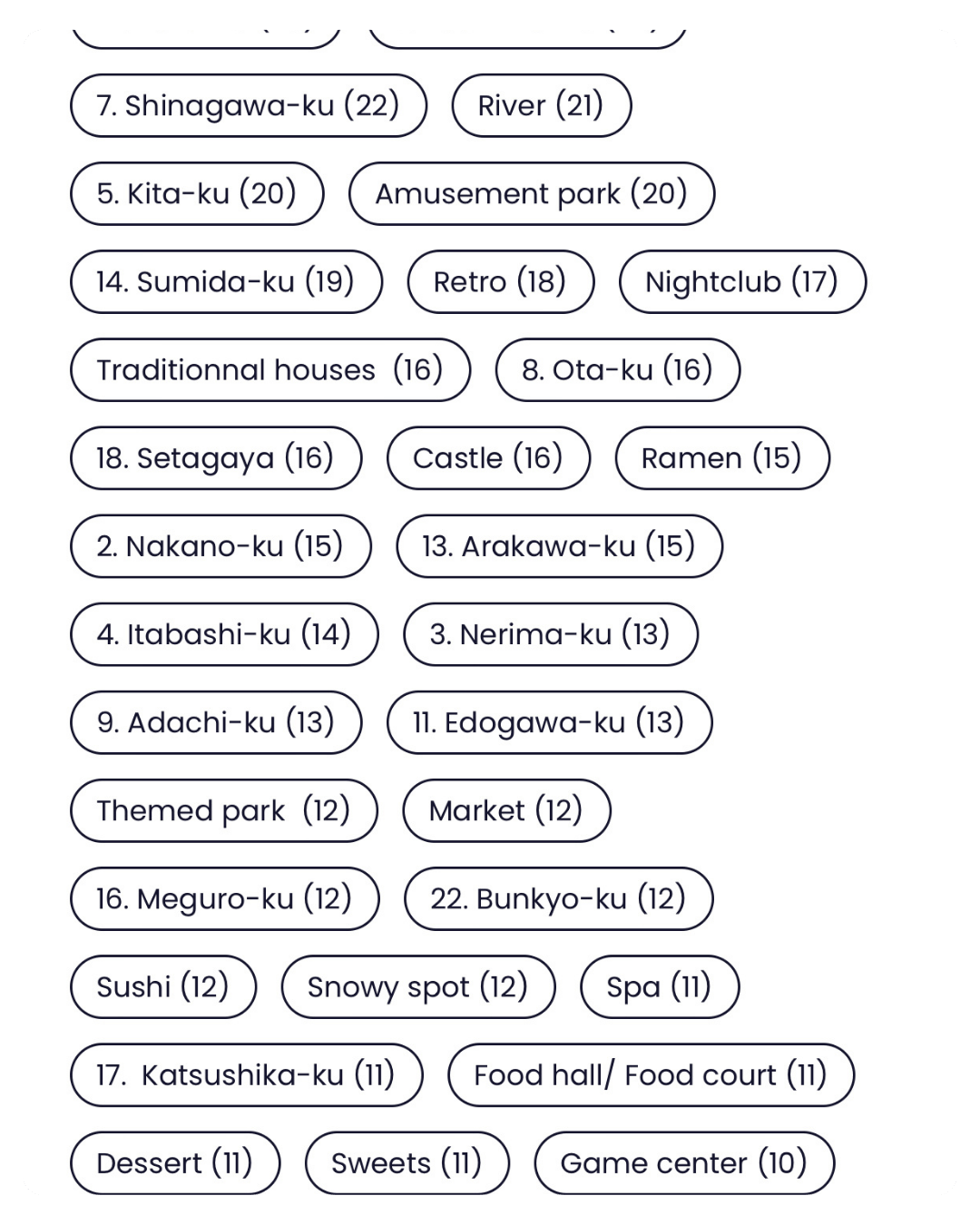
+ 1000 things to do, filterable by category & tags
Lifetime access to my itinerary and all future updates.
10 to 30 days curated itineraries, fully customizable
Kanto (Tokyo & surroundings) Day by Day customizable Itinerary (10 to 15 days)
Kansai (Osaka, Kyoto, Nara...) Day by day Itinerary customizable (13 to 15 days)
Tokyo Guide by Neighborhood (23 special ward)
15+ additional day trips detailed for exploring nearby destinations from Tokyo, Osaka, Kyoto.
Interactive map with all key spots marked & filterable by category & tags
Benefit from in-depth practical advice (navigation, accomodation, restaurants, cultural experiences)
PDF & Excel sheets (with less updates than online version)

What it looks like on the app :




If you prefer something fully tailored, I also offer a 100% custom travel planning service.
I design a day-by-day itinerary based on your dates, interests, budget, travel pace, and priorities. You simply follow the plan and enjoy your trip.
And if you like flexible, editable itineraries, you can also find my ready-made itineraries on Holicay.
They’re ideal if you want a solid base you can customize with your travel companions.

Hi, I’m Marie, the creator behind @tabimawari.
I lived in Kyoto, learned Japanese, and keep returning to explore Japan beyond the obvious.
Planning a trip to Japan usually breaks at the same point: you save a lot of places, but don’t know how to turn them into a realistic route. Cities are large, distances are not intuitive, and it’s hard to know what actually fits in one day.
This guide was created to solve that. It helps you understand how places connect, how many days make sense per area, and how to build an itinerary that flows.
With the interactive map, you can explore curated spots across Japan, follow ready-made itineraries and day trips, mix my routes with your own, and adapt everything to your pace.

MY SOCIALS


MY NEWSLETTER
Japan Monthly by Tabimawari : Subscribe to get a monthly email packed with inspiration, local tips, and events happening across Japan straight from someone who’s lived and traveled a lot.

Look for the best accommodations in Japan :

Explore Japan with Local Guides
Marie creator behind @Tabimawari
Hi, I’m Marie.
French islander from Reunion island, Japan lover, and travel planner behind Tabimawari.
I spent a year living in Kyoto, learning Japanese and falling in love with the culture. Since then, I’ve kept going back, exploring every corner from Tokyo to the tiniest hidden towns.
I created these guides after spending months planning, testing, and fine-tuning every detail so you don’t have to. Inside, you’ll find:
✅ Interactive maps
✅ Step-by-step directions
✅ Local spots + travel tips
✅ Offline use
Each guide is made with care, based on real-life travel, not generic blog advice.
This is what I wish I had on my first trip to Japan and now it’s yours.
MY SOCIALS
MY NEWSLETTER
Plan your Japan trip without
the overwhelm
Follow me
Newsletter
Japan Monthly : Subscribe to get a monthly email packed with inspiration, local tips, and events happening across Japan straight from someone who’s lived and traveled a lot.