
What to Do in Japan in January
January is one of the most culturally important months in Japan.
It’s the start of the year, a quieter travel period after New Year’s week, and the heart of winter in many regions.
You’ll see strong traditions, seasonal food, snow landscapes, and fewer crowds in cities.
Here’s everything happening across Japan in January 👇
❄️ Where to Go in January
TOKYO
Meiji Jingu
Senso-ji
Shinjuku Gyoen (winter scenery)
Tokyo Midtown winter illuminations
Mount Takao (clear winter views)
KYOTO
Fushimi Inari Taisha
Kinkaku-ji
Arashiyama
Nanzen-ji
Gion streets early morning
OSAKA
Sumiyoshi Taisha
Osaka Castle Park
Shitenno-ji
Minoo Park (winter trails)
HOKKAIDŌ
Sapporo city
Otaru Canal
Niseko
Asahikawa area
Jozankei Onsen
TŌHOKU
Ginzan Onsen
Yamadera
Zao Onsen
Lake Towada winter area
HOKURIKU / CHŪBU
Kanazawa
Shirakawa-go
Takayama old town
Nagano snow areas
KYŪSHŪ
Beppu Onsen
Yufuin
Kagoshima city
Takachiho Gorge winter views
🎎 Main festivals & events
🎎 Main festivals & events
Jan 1–3 Hatsumode New Year shrine and temple visits, nationwide
Jan 1 First sunrise viewing Hatsuhinode, coastal areas and mountains
Jan 7 Nanakusa no Sekku Seven herbs rice porridge tradition
Jan 10 Toka Ebisu business prosperity festival, Osaka and western Japan
Jan 15 Sagicho and Dondo-yaki fire festivals, nationwide
Mid January Coming of Age Day Seijin no Hi ceremonies, nationwide
Mid to late January Winter sumo tournament Hatsu Basho, Tokyo
Throughout January New Year performances and rituals at major shrines and temples
All January events in Tokyo here.
All Japan january event here.
🌅 New Year Traditions Explained
Hatsuhinode First Sunrise
Hatsuhinode is the first sunrise of the year, usually watched on January 1.
People go to the coast, mountains, observation decks, or high viewpoints early in the morning.
Seeing the first sunrise is believed to bring good luck, health, and success for the year ahead.
Popular locations include seaside areas, Mount Takao near Tokyo, coastal viewpoints, and high-rise observation decks.
Hatsumode First Shrine or Temple Visit
Hatsumode is the first visit of the year to a shrine or temple, usually between January 1 and January 3.
People pray for health, safety, work success, studies, and family well-being.
The ritual usually includes washing hands, offering a coin, bowing, clapping twice at shrines, and making a silent wish.
Many people also buy omamori charms, draw omikuji fortunes, and return last year’s charms to be burned.
Joya no Kane Temple Bell Ringing
Joya no Kane takes place on the night of December 31, just before midnight.
Buddhist temples ring their bell 108 times to symbolize the removal of human desires and negative feelings before the new year.
Some temples allow visitors to participate and ring the bell themselves.
The final bell is rung at midnight to welcome the new year calmly.
🍵 What to eat this month
Osechi ryori New Year food sets
Ozoni mochi soup
Toshikoshi soba leftovers and regional styles
Buri yellowtail winter fish
Mikan mandarins
Amazake warm rice drink
Daikon dishes and winter vegetables
💡 Travel tips
New Year week Jan 1–3 is busy at shrines and transport hubs
After Jan 4 cities become much quieter
Many shops close temporarily during New Year holidays
Snow affects transport in northern and mountain regions
Winter daylight is short plan outdoor visits earlier
Onsen towns are at peak comfort in January
🗺️ Plan Your Perfect Trip
If you want to plan your Japan trip without spending hours researching, my Japan Travel Guides & Interactive Itineraries are made for you 👇
🔗 Discover my Japan Guides & Maps
Includes 1000+ curated spots, ready-made itineraries, offline maps, and travel tips. Or, if you prefer a 100% personalized experience, I can create your custom Japan trip from itinerary and trains to local stays and unique routes.
✨ Next Month…
February brings snow festivals, plum blossoms, and quieter travel across Japan.
Plan Your Japan Trip More Easily
If you're going to Japan you're probably facing :
Too much information
How to organize
Don’t know where to go
Train system feels confusing
Afraid of missing places
Planning a trip to Japan usually breaks at the same point: you save a lot of places, but don’t know how to turn them into a realistic route. Cities are large, distances are not intuitive, and it’s hard to know what actually fits in one day.
This guide was created to solve that. It helps you understand how places connect, how many days make sense per area, and how to build an itinerary that flows.
With the interactive map, you can explore curated spots across Japan, follow ready-made itineraries and day trips, mix my routes with your own, and adapt everything to your pac
I created my Japan Travel Guide to help you organize your trip in a clear, realistic way.
Details on what you'll have
Best of both world : touristy & off the beaten path places
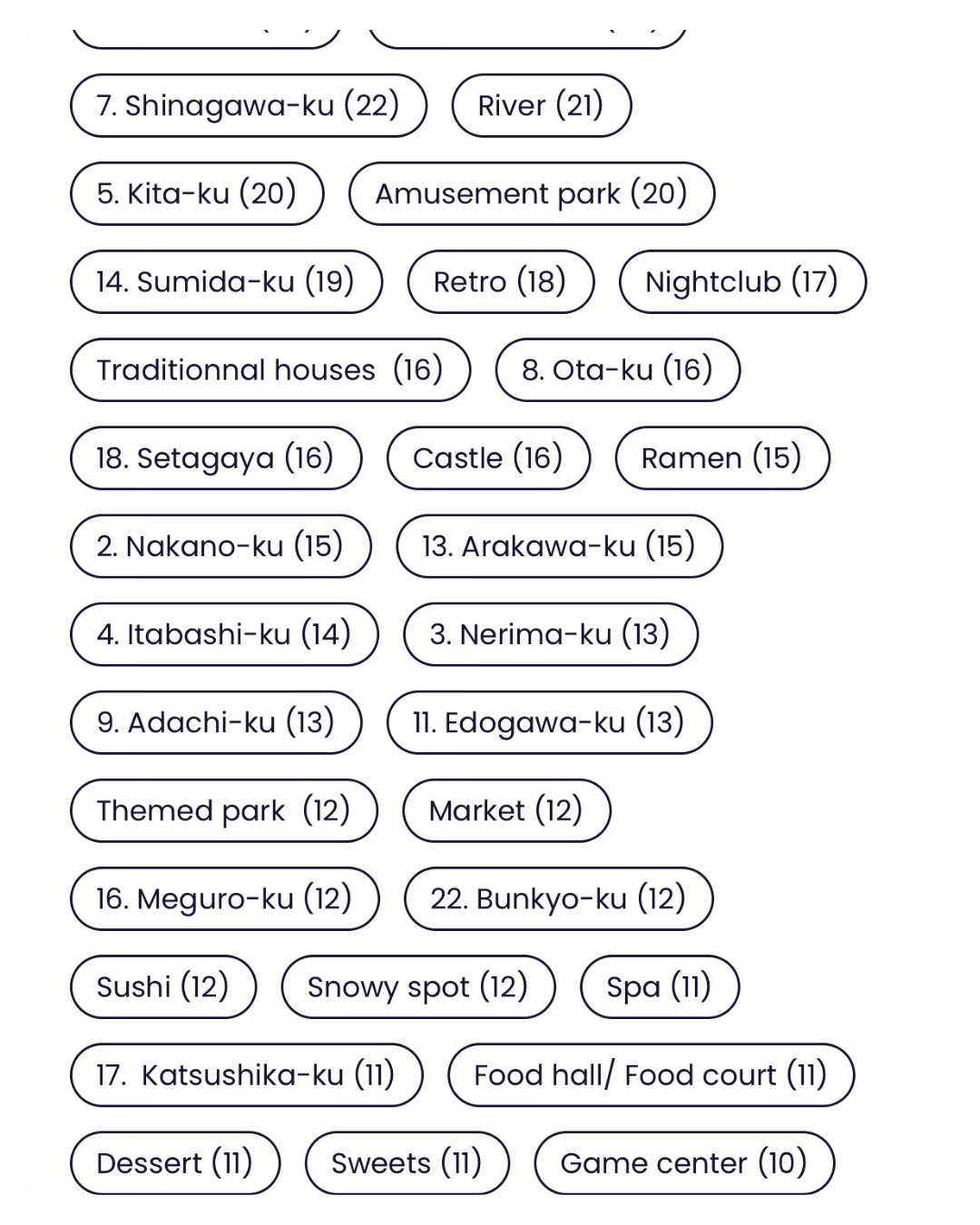
+ 1000 things to do, filterable by category & tags
Lifetime access to my itinerary and all future updates.
10 to 30 days curated itineraries, fully customizable
Kanto (Tokyo & surroundings) Day by Day customizable Itinerary (10 to 15 days)
Kansai (Osaka, Kyoto, Nara...) Day by day Itinerary customizable (13 to 15 days)
Tokyo Guide by Neighborhood (23 special ward)
15+ additional day trips detailed for exploring nearby destinations from Tokyo, Osaka, Kyoto.
Interactive map with all key spots marked & filterable by category & tags
Benefit from in-depth practical advice (navigation, accomodation, restaurants, cultural experiences)
PDF & Excel sheets (with less updates than online version)

What it looks like on the app :




If you prefer something fully tailored, I also offer a 100% custom travel planning service.
I design a day-by-day itinerary based on your dates, interests, budget, travel pace, and priorities. You simply follow the plan and enjoy your trip.
And if you like flexible, editable itineraries, you can also find my ready-made itineraries on Holicay.
They’re ideal if you want a solid base you can customize with your travel companions.

Hi, I’m Marie, the creator behind @tabimawari.
I lived in Kyoto, learned Japanese, and keep returning to explore Japan beyond the obvious.
Planning a trip to Japan usually breaks at the same point: you save a lot of places, but don’t know how to turn them into a realistic route. Cities are large, distances are not intuitive, and it’s hard to know what actually fits in one day.
This guide was created to solve that. It helps you understand how places connect, how many days make sense per area, and how to build an itinerary that flows.
With the interactive map, you can explore curated spots across Japan, follow ready-made itineraries and day trips, mix my routes with your own, and adapt everything to your pace.

MY SOCIALS


MY NEWSLETTER
Japan Monthly by Tabimawari : Subscribe to get a monthly email packed with inspiration, local tips, and events happening across Japan straight from someone who’s lived and traveled a lot.

Look for the best accommodations in Japan :
Explore Japan with Local Guides
Marie creator behind @Tabimawari
Hi, I’m Marie.
French islander from Reunion island, Japan lover, and travel planner behind Tabimawari.
I spent a year living in Kyoto, learning Japanese and falling in love with the culture. Since then, I’ve kept going back, exploring every corner from Tokyo to the tiniest hidden towns.
I created these guides after spending months planning, testing, and fine-tuning every detail so you don’t have to. Inside, you’ll find:
✅ Interactive maps
✅ Step-by-step directions
✅ Local spots + travel tips
✅ Offline use
Each guide is made with care, based on real-life travel, not generic blog advice.
This is what I wish I had on my first trip to Japan and now it’s yours.
MY SOCIALS
MY NEWSLETTER
Plan your Japan trip without
the overwhelm
Follow me
Newsletter
Japan Monthly : Subscribe to get a monthly email packed with inspiration, local tips, and events happening across Japan straight from someone who’s lived and traveled a lot.